Thursday, July 16, 2026

The Brief Timeline of Pakistan's Deceptions

The history of relations between the Pakistani state and the Baloch people has been marked by deep mistrust, political conflicts, and a series of events that Baloch view as a pattern of broken promises and deception.

A central point in Baloch political narratives is the incorporation of the Khanate of Kalat into Pakistan in 1948. The Khanate of Kalat had maintained a distinct status during the transition from British rule, and negotiations took place between the Khan of Kalat and Pakistani leaders regarding its future between Kalat state and Pakistan as two neighboring states. However, Pakistan used its military force against Khan of Kalat for the accession. It was under political and military pressure rather than through a genuinely free decision.

The early event that contributed to Baloch mistrust was the uprising of Prince Agha Abdul Karim Khan, the younger brother of the Khan of Kalat, Mir Ahmad Yar Khan. Shortly after the accession of Kalat to Pakistan in 1948, Agha Abdul Karim opposed the decision and moved to the mountains with supporters, demanding the preservation of Baloch autonomy and political rights.

After a period of resistance, he and his companions entered negotiations with the authorities. he was given assurances regarding his safety and a political resolution. However, after surrendering, he was arrested and sentenced to imprisonment, and the episode became one of the earliest examples cited by Baloch nationalists as evidence that political assurances given by the state could not be trusted.

The events following the 1958 uprising of Nawab Nauroz Khan remain one of the most painful memories in Baloch history. Nawab Nauroz Khan and his companions were persuaded to come down from the mountains after assurances of safety, including appeals made in the name of the Quran. After their surrender, several of his companions were sentenced to death, while Nauroz Khan died in prison. For many Baloch, this episode became a symbol of broken trust between the state and Baloch leadership.

In 1973, the dismissal of the elected government of Sardar Attaullah Khan Mengal in Balochistan further deepened political resentment. The federal government removed the provincial government, imposed governor's rule, and a violent conflict followed between state forces and Baloch insurgents. Baloch political leadership considered this an example of the denial of democratic rights, while the state justified its actions through allegations of security concerns.

Decades later, the killing of Nawab Akbar Khan Bugti in 2006 became another defining moment. Negotiations were taking place between Bugti and government representatives, including political figures such as Chaudhry Shujaat Hussain and Mushahid Hussain Sayed. However, the conflict escalated, and Nawab Bugti was killed during a military operation in Kohlu. For entire Baloch nation, this event reinforced the belief that negotiations with the state could end in betrayal rather than a political solution.

Beyond these historical events, the question of transparency remains a major concern. Independent journalists, researchers, and international observers have repeatedly faced difficulties accessing parts of Balochistan freely. Restrictions on information, security limitations, and competing political narratives have made it difficult for the outside world to fully understand the realities on the ground.

From the Baloch perspective, this lack of transparency has emboldened Pakistani miliary to continue the ugly practice of enforced disappearances, human rights violations, and political repression across occupied Balochistan. The Baloch nation believes that they have been the victims of decades of military policies, conflict, and a lack of meaningful political dialogue.

The accumulated experiences of the past decades have created a profound crisis of trust. For Baloch political activists, the issue is not only about individual incidents but about a historical pattern in which promises, agreements, and negotiations have repeatedly failed to produce a lasting result.

The future of relations between the state of Pakistan and the Baloch people no more a question of reset future relations, but when Pakistan is going to withdraw its forces from Balochistan as Baloch have crossed the Rubican River.

Wednesday, May 14, 2025

Lack of Unity and Strategic Planning in the Baloch Liberation Movement

Archen Baloch

In a recent Facebook post, I expressed concern that if the Baloch people do not adequately prepare for the aftermath of the current war, Pakistan may take harsh and hostile actions against them. In response, Advocate Mr Ali Kachkol asked me to share my suggestions. I saw this as a timely opportunity to examine the collective political behaviour of the groups involved in the Baloch liberation movement.

Before continuing, I should mention that this is my first time writing about internal issues in English. Those who follow my posts know I’ve always advocated for a holistic approach to the Baloch liberation struggle. No single party or organisation can defeat the enemy through an isolated effort. Success demands unity and strategy.

I am particularly concerned about the next phase of conflict, especially if a war breaks out between Pakistan and India or, as a matter of fact, between Iran and Israel/the West. Neither Iran nor Pakistan is a trustworthy state; history shows they used brutal tactics against the Baloch when we were unprepared. We must be ready to respond to future aggression with a united front.

To achieve this, Baloch organisations and parties must come together under a single umbrella. This collective body should work to establish alternative state institutions and develop a national agenda. Only a unified mandate can attract meaningful attention and support from the international community. Without a single voice, no country will take our cause seriously.

Creating such a platform is not an impossible task. With a population nearing 70 million and a landmass of 75,000 square kilometres situated at a strategic crossroads of three major regions, we are too significant to ignore—if we organise ourselves effectively.

What’s needed is a principled commitment from every political actor to set aside personal ambitions for the greater cause. A roundtable dialogue among all pro-independence parties could result in a national umbrella organisation, similar to the Palestinian Liberation Organisation (PLO).

However, a significant obstacle has been the divisive attitude of a segment within the pro-freedom movement, often referred to as the middle class. For over two decades, they have promoted narratives like “social victimhood” and anti-Sardarism—ironically echoing Pakistani state propaganda—to claim exclusive legitimacy. This has led to a monopolistic and exclusionary form of leadership.

While these middle-class leaders claim to represent the will of the Baloch masses, they ignore the fact that genuine public opinion can only be gauged through democratic means, nearly impossible under Pakistani and Iran’s colonial rules. Ironically, some of them were once supported by the very individuals they later sought to discredit.

One of the most damaging tendencies in our movement is the “solo flight” syndrome, where each leader believes the movement hinges solely on them. As an Indian poet once wrote, “Every brick thinks the wall exists because of it.” This ego-driven mindset undermines collective action.

As a result of these divisions, we are unprepared to take charge if Pakistan or Iran were to collapse today. During and after the recent three-day war between India and Pakistan, countless appeals were made on social media by individuals and leaders asking India for support. But these were disorganised and lacked any central coordination.

This contradiction is stark: we speak of national liberation, yet operate in a completely fragmented manner. We have failed to present a coherent national programme, strategic plan, or roadmap to those whose support we seek. Our disunity weakens our credibility both at home and abroad.

Even worse, some individuals and groups have spent over a decade downplaying the political dimension of our struggle, hiding behind ideological rhetoric such as class struggle and revolution. Without strong political engagement, we cannot expect the international community to respond to our appeals.

If we truly wish to strengthen the foundation of our movement, we must create an inclusive and strategic platform without delay. In politics, genuine gestures of intent are essential for building unity among those who share a common vision.

In envisioning an independent Balochistan, our thinking must also be inclusive and far-reaching. Our outreach to countries like India should not be reactive and crisis-driven. Instead, we need a permanent, well-defined foreign policy backed by a broad national mandate, and we must engage with the international community through a consistent and coherent message.

Eventually, we could form a National Representative Council to lead the political dimension of the movement and present a united front. This is the path to both internal unity and international recognition.

Saturday, August 31, 2024

Human Rights Abuses in Balochistan

 By Archen Baloch

Balochistan has long been a region marred by brutality, with entire villages and cities bearing the scars of atrocities committed by Iran and Pakistan. The conflict is characterised by extreme measures taken by these states to suppress dissent and stifle aspirations for independence.

Forced Disappearances

One of the most harrowing aspects of the crisis in Balochistan is the phenomenon of enforced disappearances. Thousands of Baloch political activists, students, and civilians have been abducted by state security forces, often without legal justification. These individuals are taken to undisclosed locations, with no information provided to their families. Many victims are subjected to torture, and some are never seen again. Pakistan denies these disappearances, while Iran accuses those abducted of waging war against God or spreading mischief, often sentencing them to death in kangaroo courts.

The case of Zakir Majeed Baloch is emblematic of this tragedy. A prominent Baloch student leader and political activist, Zakir was abducted by Pakistan’s security forces in 2009. Despite years of advocacy by his family and human rights organizations, his whereabouts remain unknown, a fate shared by thousands of others in Balochistan.

Similarly, in Iran, the IRGC and intelligence agents routinely arrest, torture, and execute Baloch individuals on trumped-up charges. A notable case is that of Molavi Fathi Mohammad Naqshbandi, the Friday Prayer leader of Rask, who has been “physically and mentally tortured” for his support of anti-government protests and for speaking out against the rape of Maho Baloch by the Chabahar police chief.

After his arrest, he was accused of “disseminating false information, defaming the Islamic Republic of Iran, and acting against national security.” According to his son, Molavi Abdul Ghafar Naqshbandi, his elderly father endured torture involving a “stun gun and an ironing machine” at the Intelligence Department of Zahedan, the capital of Iranian-Occupied Balochistan.

Impact on Families

The impact of these disappearances on the families left behind is profound. Mothers, sisters, wives, and children live in perpetual grief and uncertainty, marked by protests, vigils, and desperate searches for information about their loved ones. The pain of not knowing whether a son, brother, or husband is dead or alive is a form of psychological torture that continues for years. Many family members of the disappeared carry this pain to their graves.

State-Sponsored Atrocities

In addition to enforced disappearances, the Baloch people face other forms of state-sponsored violence, including extrajudicial killings, torture, arbitrary arrests, and executions. The Pakistani and Iranian governments use these tactics to crush the Baloch freedom movement and silence dissent. Military operations in the region often result in civilian casualties, destruction of property, and further displacement of already marginalised Baloch nation.

International Response

The international community has largely remained silent on the human rights abuses in Balochistan. While some human rights organisations and activists have tried to bring attention to the crisis, the issue remains underreported, and the perpetrators of these atrocities continue to act with impunity.

The Baloch people feel ignored and discriminated against by international human rights groups and the global community. The UN’s silence on the atrocities, brutalities, and genocidal policies of its member states, Iran and Pakistan, is causing the Baloch to lose hope in the organisation.

Feeling abandoned, the Baloch are relying on their own strength, resisting Pakistan and Iran’s barbarism by all means available. The world must step forward to support the Baloch before it is too late.

Thursday, July 18, 2024

Pakistani Potion of Lid-Laddu to the Baloch Nation

 By Archen Baloch

During a two-day visit to Balochistan, Bilawal Bhutto Zardari, the Chairman of the Pakistan People’s Party (PPP), left no stone unturned in his efforts to appease his masters in the GHQ. In a public gathering in Quetta, the capital city of Pakistani-occupied Balochistan, he offered free healthcare services to the Baloch nation. He announced that he would provide free healthcare to those who come to Karachi for treatment and build a large hospital in Quetta where free healthcare services would be available.

Behind closed doors, however, Bhutto met with the selected Chief Minister of Balochistan, Sarfraz Bugti. According to Dawn, Bhutto’s primary objective was “to defeat the terrorism narrative and restore peace and political stability in Balochistan through grassroots political processes.” 

Before Bhutto visited Quetta, his father, Asif Ali Zardari, chaired a security meeting of high-security officials in the coastal city of Gwadar. The meeting aimed to convince the Chinese government that the “Azm-e-Istehkam operation” would pave the way for exploiting Balochistan’s regional resources.

To understand the reality behind Bhutto’s promise of free healthcare to the Baloch masses and his insistence on addressing the terrorism narrative, we need to view it through the lens of a popular story.

Bhutto’s promise can be likened to a game of lid-laddu. In the Balochi language, “lid” means camel dung, while “laddu” is an Indian sweet made from various ingredients and sugar syrup.

The story behind the lid-laddu game was narrated by the father of the Baloch nation, Khair Bakhsh Marri, during an interview with BBC Urdu. He recounted a tale about a thug in a village who saw children with laddus and wanted to have them. Instead of directly snatching the laddus and offending the children, the thug collected camel dung, which is similar in shape and colour to laddu. He then called the children to play a game, offering four lids for one laddu. In this way, he deceived the children into trading their sweets for camel dung.

The Baloch nation, in terms of natural resources, is one of the richest on earth. With a population of 65 million and a geography of 700,000 square kilometres, Balochistan is well-endowed.

The Bhuttos were brought into power in Pakistani politics to govern the masses with the so-called socialist slogan of “Bread, Clothes, and House,” a strategy crafted by the Pakistani military establishment. The Bhuttos have been selling this laddu, which is lid (dung), to the Pakistani masses. Now, this deceit has extended to Baloch society.

We must consider whether it is appropriate to detail the statistics of our resources before a foreign occupier or to kick him out of our land. They came and occupied our land and started usurping our natural resources. However, it is appropriate to let the world know what we have in Balochistan in terms of natural resources. The variety of mineral resources that we possess in Balochistan, under Pakistani occupation, are mouthwatering for other resourceless nations.

The Sui gas field, one of the largest natural gas fields in the region, was discovered in 1952 and piped to Punjab and other cities in Pakistan, depriving Balochistan of its resources. The Sor Range, Khost-Shahrag-Harnai, and Duki areas have some of the world’s longest deposits of coal. Silver, copper, and gold deposits found in Reko Diq are among the largest reserves in the world, being exploited by Chinese and Canadian companies against the will of Balochistan.

Iron ore deposits are also found in the Chagai District, along with significant sulphur deposits. Balochistan is a major producer of chromite in the Muslim Bagh area, and we have substantial deposits of high-quality marble and granite. Other natural resources include limestone, used for cement production, and high-quality gypsum reserves used in construction and the manufacture of plaster.

The Koh-e-Sulaiman Mountain range and coastal belt of Balochistan contain large quantities of uranium deposits. However, with the support of China, Pakistan is extracting these deposits and polluting Balochistan’s ecosystem by dumping nuclear waste in coastal areas.

Balochistan’s coastline along the Arabian Sea is rich in marine resources, brimming with high-quality marine life. However, it has now been turned into a marine game park for Chinese fishing trawlers. Balochistan has four seasons and produces a variety of high-quality fruits and vegetables, including dates, grapes, watermelons, tomatoes, potatoes, onions, apples, pomegranates, peaches, wheat, rice, and various beans. Balochistan is also known for livestock farming, including cows, sheep, goats, horses, and camels.

With vast open plains and high solar insolation levels, Balochistan has significant potential for solar and wind energy development.

Given our immense natural resources and our status as a large nation, why should we Baloch allow ourselves to be governed by lid-laddu thugs? We were an independent nation but became the victim of the British Great Game in our region. Pakistan occupied our country through military aggression at the behest of the British Empire. Whenever we resisted and constructed our narrative of national liberation, they dubbed our leadership as national traitors.

In their eyes, our narrative is now terrorism! Meanwhile, the looting and plundering of our resources are negligible matters, the killing and dumping of Baloch political activists are not considered crimes, and the destruction of our ecosystem is seen as a social issue, which they believe can all be sorted out with an offer of an apology. They think that their lid-laddu is a potion for taming the Baloch into submission.

Under the lens of their colonial rule, our genuine elder political leadership is often labelled by the Pakistani military establishment and its stooges as tribal chieftains because they refused to buy into the Bhuttos’ lid-laddu game. As a result, they have been defamed, character-assassinated, persecuted, hanged, assassinated, and forced into exile.

The new generation of the current liberation movement is also facing the same policies of persecution and the lid-laddu game. However, the perseverance of the Baloch resistance refuses to give in to Pakistani state terrorism. It has achieved an optimal level of success in terms of persistence and resistance.


https://archenbaluch.blogspot.com/2024/07/pakistani-potion-of-lid-laddu-to-baloch.html

Sunday, February 18, 2024

Pakistan’s Sham Elections in Occupied Balochistan


By Archen Baloch


Pakistan conducted its general elections on February 8, 2024. It also conducted its elections in occupied Balochistan at gunpoint where only the PPP and Muslim League (N) who were recently favored by the army to make their presence for certain reasons, one of them being the stark question of how to hide Pakistan’s utter failure in containing the 24 years old Balochistan’s insurgency for liberation.

The recent induction of PPP and Muslim League (N) in Balochistan’s politics is widely seen as an attempt of the Pakistan army to hoodwink the international community into believing that Baloch are represented in Pakistan’s mainstream polity and they believe in Pakistan. Their objective is to make sure that Balochistan’s political contour merges into Pakistan’s mainstream politics whereby the nationalistic outlook of Baloch politics is erased.

However, the picture in Balochistan differs from that of expectations of the General Headquarters (GHQ) of the Pakistan army in Rawalpindi. Independent sources say that the turnout in occupied Balochistan was hardly 3 percent. The NA 261 Kalat is a case in point where the total number of voters in this constituency is 371430, out of which only 12,204 voters exercised their right to vote, thus the voter’s turnout was 3.97 percent. The average turnout stands at 2.48 of the total votes for so-called national and provincial elections across Balochistan.

Those political underdogs who failed to deliver on Pakistan’s army script have been discarded and replaced with military stooges and death squad members with no political background. The long-serving pseudo-Pashtun nationalist Mahmood Achakzai, now no more of any use to the Pakistan army after the Taliban took over in Afghanistan, divulged that a Pakistan army officer had taken money and sold his seat to another candidate.

Moulana Hedayatullah, the head of Haq Do Tehrik who won the Gwadar provincial seat with a low turnout margin revealed that the army had rigged the votes and favoured their people, he said that “thieves, under the supervision of the Pakistan army, cast thousands of fake votes at the polling stations where even the staff did not arrive, he further said that  “two Kech sub-districts, Mand and Dasht-Nagor, where no polling had ever taken place and people did not come for voting, yet an Afghan refugee was given the MNA seat with 40778 fake votes”.

The international community, especially the US, UK and the EU who each year give billions of dollars in aid to Pakistan have alleged interference, irregularities and fraud during and after the voting process and urged that these undemocratic practices should be fully investigated.

Pakistani military establishment overwhelmingly dominated by Punjab is hell-bent on stamping their will over the Baloch nation and its state manipulation has always been at work since early times when Balochistan was forcefully annexed – meddling from the pre-poll phase to election day irregularities to the post-poll counting process and cobbling together an alliance, at every stage, the will of Pakistan army is blatantly executed. Every attempt at a manipulative political manoeuvre in Balochistan is aimed at maintaining the monopoly of the Sunni Punjabi army over Balochistan. 

The fact is that the Baloch never joined Pakistan of their own free will, It was a forced annexation at gunpoint against the will of the Baloch people. A large number of pro-independent political parties and armed organizations are resisting and struggling to liberate Balochistan from the illegal occupation of Pakistan. According to Pakistani police reports 130 incidents of bomb blasts were carried out by the Baloch Liberation Army and other organizations.

The Baloch Liberation Army (BLA) in statements said declared Pakistan’s elections in Balochistan a sham and illegal and vowed to resist them with their might available at their disposal.  The BLA’s spokesperson, Azad Baloch, also told the media that fighters of BLA carried out at least 43 attacks on Pakistan’s electoral process in Balochistan on 8 February 2024 making it clear to the Baloch nation and the world that the Baloch do not accept Pakistan illegal occupation and colonisation.


Monday, October 3, 2022

The bloody Black Friday: British Still on the Wrong side of Baloch History


By Archen Baloch 

On Friday, 30th Sept 2022 Iranian forces killed more than 60 unarmed peaceful Baloch protesters and injured more than 275 people in the streets of Zahedan, the capital city of Iranian occupied Balochistan. The protest was a spontaneous uprising by its nature, because, apparently no political party had given the call for it.

According to confirmed reports, widely available on social media in Persian and Balochi languages, the protests across Iranian-occupied Balochistan erupted when the news emerged that the police head of the coastal city of Chabahar, Colonel Ebrahim Kochzai, had raped a 15-year-old Baloch girl Maho Baloch on 27th September after arresting her for investigation. This ugly act of rape of a Baloch girl had taken place at a time when entire non-Persian nations, the Kurds and Ahvazi Arabs were protesting the murder of Kurdish girl, Mahsa Amini across Iran.

Further information suggests college and university students across Balochistan have also come out in support of the people of Zahedan and against the indiscriminate firing of the Iranian forces at peaceful protesters in Zahedan city.

One is compelled to ask that despite knowing the fact that the Persian-dominated Iranian ethnoreligious regime won’t tolerate dissenting voices, what made the Baloch public surge on the streets and protest the brutalities of the regime’s unbridled armed forces immune from public accountability? 

Religiously Shiite-dominated Iran, like Punjabi-dominated Pakistan, is also a multi-national state which is dominated and governed by an ultra-nationalist Persian majority that never bothered to accept ethnic and cultural diversity.  Hypothetically, even if the Baloch nation decides to settle for a moment for a federal solution, then who can make Iran become genuine a genuine democracy where all nations can be represented equally in its federal structure? 

Like many Middle Eastern nations, Balochistan was also a united independent nation. However, when British Raj wanted to establish a buffer zone between Central Asia and South Asia after fully conquering the Indian subcontinent, it pushed its forces towards Sindh and Balochistan in order to occupy Afghanistan and turn it into a buffer zone against Russian influence. The expeditionary forces of the British Raj in Balochistan, while on their way to Afghanistan, faced a reluctant nation that didn’t like the British invading Afghanistan by using their soil.  

In the wake of British advancement towards Central Asia –Afghanistan, we, Baloch, lost our independence and sovereignty to British military aggression. The British Raj attacked the center of the Baloch Federation; Meeri Kalat in 1839 and subsequently the Raj took the charge of our fate.

The western part of Balochistan was still under the rule of Mir Dost Mohammad Khan Baranzai, however, Iranian Persian rulers were constantly pushing their expansionist whim into bordering areas of Balochistan. “In 1927, the Persian Government made an ultimatum on Mir Dost Muhammad Barakzai to accept the sovereignty of Persia (Sykes, 1902). He was promised that the king of Persia would consider his personal privileges in case he surrenders to the Persian demands. For the general Baloch population, it was proclaimed that extensive developmental works would be initiated in return of a pledge of loyalty to the Persian state. Mir Dost Muhammad Khan Barakzai however, the legitimate ruler of Western Balochistan, refused to submit Baloch Sovereignty to the Iranian king’s expansionist desires.

In 1928, Persian King invades Balochistan and the English Raj, which was ruling the Eastern part of Balochistan, instead of defending Baloch territory under the 1876 agreement, encouraged the Persian king to commit aggression against Baloch sovereignty under an appeasement policy, for the fear that the Iranian king might side with Germany after the first world war. 

After the British invasion, the Baloch nation never saw a day of peace, every decade Baloch is forced to go through a blood bath, whether it was British, or now Iran and Pakistan, they never hesitated to riddle the chest of Baloch youth whenever they demanded their democratic rights be respected.

It was the British that broke Baloch national geography into pieces which led to 45 million Baloch at the mercy of two rouge nations, Iran and Pakistan. Even today, the British government and its agencies continue to create hurdles for Baloch national leader Hyrbyair Marri hampering his efforts to seek diplomatic support from the international community for the liberation of Balochistan from Iranian and Pakistan colonial rule.

It is our firm belief that given the geostrategic position of Balochistan and Baloch as a secular nation the establishment of a united independent Balochistan is the geopolitical solution to all regional conflicts in the Middle East and South and Central Asia and the international strategic communities have to see why British is reluctant to correct its historic mistakes in occupied Balochistan.

Enough is enough for British enmity towards the Baloch nation it should stop being on the wrong side of Baloch history and rectify its historical blunders. If it cannot support the freedom struggle, it should not support Pakistan and Iran as both have delivered nothing except terrorism in Balochistan India, and Afghanistan after their creation.


https://balochwarna.com/2022/10/03/the-bloody-black-friday-british-still-on-the-wrong-side-of-baloch-history/


Saturday, August 22, 2020

The Enemy at the Gates: The Baloch Perspective


22nd August 2020

 The Enemy at the Gate: The Baloch Perspective

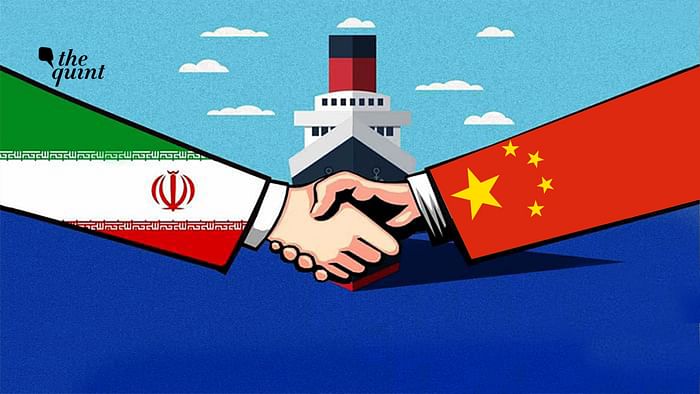
Photo credit: Arnica Kala / The Quint

By Archen Baloch

It suddenly emerged that China would pour a whopping amount of $ 400 billion into Iran for a 25 years’ strategic security and economic deal! This huge amount of money in the neighborhood is not only mouthwatering for the cash stripped Pakistan, but also it has raised security alarm for peaceful Gulf States, India, Israel America and the Baloch nation as well. The cash stripped Pakistan is now eyeing for a jackal’s share in this China-Iran-Nexus deal, despite the fact that it had already got its lion share from Belt and Road initiative of China in the form of China Pakistan Economic Corridor at the cost of Baloch blood.

 However, to win Iran’s confidence for the jackal’s share, Pakistan has now started to distance itself from Saudi Arabia by blaming it that it is not supporting Kashmir’s cause. In fact, for quite a time, Riyadh has been trying to keep Pakistan away from the Iranian sphere of influence by offering financial aids, which includes the recent $3.2 billion package to bail out Pakistan from the default which is still keeping Islamabad floating. However, China’s $400 billion’s deal with Iran hedged a new hope for Pakistan to turn a rebellious head towards Riyadh and its FM threatened to form another Muslim Ummah block out of OIC with Turkey, Malaysia and Iran if it failed to support its Kashmir cause.

Nonetheless, the tentacles of communist Chinese dragons have also reached fanatic Iran after Pakistan for a Comprehensive Strategic Partnership which is for sure is going against American strategic presence in the Arabian Gulf waters. It has now made the American presence in the Gulf all the more important than ever before, given the fact that Chinese aggressive posture and rapid advancement towards strategic locations of Balochistan’s waters and land (To Baloch, Balochistan is a single entity and Baloch nation don’t recognize the arbitrary border between Iran and Pakistan drawn by the occupying foreign forces).

In Baloch political circles, It is widely believed that China’s entrance into Balochistan entails a catastrophic demographical change for the Baloch nation on both sides of Eastern and Western Balochistan occupied by Pakistan and Iran respectively. The $400 billion are far more than enough to build a China-led security block consisting of Pakistan Iran, Turkey, and Russia, the harbinger of a gigantic shift of power imbalance in the Middle East for the peaceful Gulf States, Israel and India as well.

In this new scenario of West Asia’s geopolitical equation, Pakistan is the most distrusted mate, without Pakistan’ssupport, encouragement and nudge for wide a range of geopolitical considerations; China won’t have made it to dislodge India from Iran and didn’t breach the sanctions imposed by America. Many observers believe that this huge investment will surely reinvigorate Iran’s military mussels to wreak more havoc in the sphere of influence of Saudi Arabia.

What is next? National and regional security threats require permanent defensive fortification. The China Iran Nexus has emerged as a new permanent security threat to the peaceful Gulf States in the Middle East. Iran, under the current geographical order, whether ruled by fanatic Persian Mullah or Persian nationalist democrats or Persian King is either way, a permanent security threat to Gulf States’ stability. The history of the geopolitics of this abnormal country shows that hegemonic Persian nationalism never coexisted peacefully with its neighboring nations, Arabs, Kurds, and Baloch and other religious minorities.

The 14/9 Aramco oil attacks had badly wounded the Kingdom of Saudi Arabia’s pride as a prominent state of the Arab world, all it needed was to exact a befitting retaliation that could have settled the old and new scores with Iran which was believed to be behind the attacks on Aramco oil installations in Abqaiq. It was a rare opportunity that had just landed on the lap of Saudi and American leadership to put the genie of Iranian extremists in rest.

However, in terms of retaliation, nothing happened except some arguments, Kingdom’s possible war ally America had other strategic security priorities back then, on July 11, 2019, U.S. Army Gen. Mark Milley, to the Senate, rules out the probability of a war with Iran, saying that “the military is focused on a strategy of great-power competition with Russia and China”. “You mentioned war with Iran,” Milley said. “I don’t know that that would happen but if it did happen it would have a significant impact on the distribution of the force relative to those other priorities”.

The first shock that Trump’s announcement gave to the Middle East was that it would pull its troops from Syria’s north-south of the Kurdish region creating security Vacuum in the Middle East which gave Turkey a clean chit to cull the secular Kurds in the region. America failed the Kurds at a time when Iran was daring a challenge to the international community in international waters way of the Arabian Gulf. We cannot rule out the fact that American backtracking on Iranian blatant aggression on Aramco encouraged Turkey to attack the Kurds when it pulled its troops from northwestern Syria.

It means America had issued a clean chit at the time to Iran to wreak havoc in the Middle East with blanket impunity. The frustration was echoed by Dr. Ali Qureshi, an ex-Saudi army officer who tweeted that America was engaged in dialogue with Iran behind the scene, there is no possibility of America to take on Iran by offensive measures. 

Nevertheless, for all his bluster and backtrackings, President Trump is still obliged to listen to Saudi leadership for a military commitment to take on Iranian aggression for attacking Saudi Arabia. On a discounted moral ground, one needs to admit that when American sanctions provoke Iran into taking daring actions against vulnerable GCC states and their international assets, so what are then the American assurances and measures for safety and security to its allies, especially when one of its second strategic security competitors China has already arrived at the Gate of Gulf – Balochistan?

Balochistan, located at the tri-juncture of three major regions, serves as a bulwark against extremist groups and Iranian influence in the region. An independent Balochistan can play a super rule by becoming a key conduit in linking the Eurasian hinterland’s trade to Gulf ports; however, nothing can be done without the restoration of Balochistan’s independence back to 1928 and 1848 status. Baloch and Kurds are living on their lands but they’re being ruled by despotic Muslim aliens at gunpoint. Here comes the concept of power, whoever poses it would determine the fates, and power is what Baloch and Kurds lack.

Both Iran and Pakistan eulogize all good attributions of Muslim Umma and brotherhood to the world but wreak havoc across the globe to establish Caliphate in Muslim countries. Similarly, when the iron lid of their despotic dominancy over Balochistan and Kurdistanis removed, you will find nothing except the pestering wounds of Baloch and Kurds. If we closely study the attitude and their history of behavior with Baloch and Kurds – how they’ve been ruling Baloch and Kurds – we’ll find that these dominant nations are extremely ultra-nationalists, albeit they’ve succeeded in hiding their ultra-nationalism in the garb of Islam and pseudo federalism from the eyes of the international community with Iron-curtained media blackout. The illegal colonial rulers have forced Baloch and Kurds to suffer from political, cultural and economic hardship for no reason other than to dominate and exploit their natural resources!

A normalization process of relations between Israel and the Gulf States is underway in the Middle East which is largely believed to counter Iranian and Chinese expansionism in the region, it involves defensive fortification in the Gulf States, but the Iranian expansionist whim continues to remain permanent as usual in Middle Eastern Arab countries, for, almost all of these countries don’t have the required lever over Iran to control its destabilizing behavior in the region internally, except the Baloch, Kurds and Arab Al-Ahwaz cards, who’re persecuted on daily basis by the Persian mullah regime. But they’re left lurching alone.

We know that no neighboring Arab nation is happy with Iran and Pakistan for their war crimes against humanity in Balochistan because of the historical brotherly relationship between Baloch and the nations of the Gulf States. However, so far they’ve fastened their lips for some unreasonable reasons in the face of naked Iranian and Pakistani aggression against Baloch nation. Nonetheless, the Baloch nation is hoping that as a strong geopolitical leader of Arab countries, Saudi Arabia can see the light at the end of the tunnel extend its support to the Baloch nation for their liberation movement against illegal Iranian colonial rule over Balochistan.

As it is clearly stated in the US state’s foreign policy statement that “The PRC’s predatory world view has no place in the 21st century” however, the same predator is also looting and plundering Baloch natural resources without the consent of Baloch nation and Baloch are defenseless. 

Selling the ideas of federalism and democracy of western countries to Iran and Pakistan might be a rosy picture but the dominant Turks, Punjabis and Persians are extremely ultra-nationalists in their relationship with oppressed nations. These dominant nations have never bothered to set a precedent – a model of democracy – that might have guaranteed the fundamental rights of Baloch and Kurds as equal federating units. Rather, they’ve treated them as subjects instead of equal stockholders

The Western nations might find it cool that Muslim Persian daughters are wearing jeans beneath their Burkas and when the Burkas fall, a secular democracy will emerge out it, but alas, it is not the case, for Baloch and Kurds, as beneath their skins the relays the Persian ultra-nationalism which has been nurtured for centuries to subjugate Arab, Baloch and Kurds and loot their national resources in the name of federal Iran and Islam.

West, after its disengagement from the expeditions of conquering new territories after Second World War, is now afraid of a new order in the Middle East that they think that it might entail harmful consequences for their decaying old industry-based economies. Here I would like to quote my leader, Hyrbyair Marri who once said that West’s current lot of leadership has no vision and decision making will-power to review the current geopolitical order of Turkey Iran and Pakistan as to why they failed to deliver in term of peace and prosperity as member states of United Nations.

Finally, I would like to argue that given the current convulsions of the geopolitics of West, Asia and the constant new alignments of the forces in the region, Baloch and Kurds are finding it a window of hope that America and its allies including Europe, Gulf State, Israel, India and the Quad’s members will be convinced that the current geopolitical order of Pakistan, Turkey, Iran, Syria and Iraq have failed to deliver peace, stability and prosperity in the region and they’ve rather given rise to religious fundamentalism and extremism in the region. The secular Free Balochistan offers a lasting solution to the region’s security problems and plays a key role in bridging West Asia and South Asia to Central Asia for trade and commerce – as an alternative corridor to Belt and Road Initiative of China model.


https://balochwarna.com/2020/08/22/the-enemy-at-the-gate-the-baloch-perspective/

The Brief Timeline of Pakistan's Deceptions

The history of relations between the Pakistani state and the Baloch people has been marked by deep mistrust, political conflicts, and a seri...